
December 2025
It’s been a year of growth
Hosted or Co-Sponsored Events
Three pasture walks
Two grazing field days
Illinois Forage Expo where 3 awards were presented
Illinois Agricultural Legislative Day
Illinois State Fair Ag Day Breakfast
Farm Progress Show booth
Two grazing schools
Three online Grow & Graze webinars
American Forage and Grassland Council national meeting in Florida in January
Don’t miss your opportunity to attend the American Forage & Grassland Council Annual Conference January 12 to 15 in Asheville, NC.
Messaging
The IFGC website was redesigned
The newsletter was transitioned to digital access
We increased our posting to Facebook, including during National Forage Week
We’ve updated our official email to forage@illinoisforage.org
Partnership Growth
Our new partnership with the Illinois Grazing Lands Coalition resulted in the creation of The Hub. The Hub is a free, farmer-focused online platform is designed to help Illinois producers improve pasture management and grazing practices, regardless of experience level.
Dozens of pages with resources, guides, organizations, and funding opportunities
30 Blogs
7 How-to videos
Quarterly peer-to-peer online discussions with successful growers and graziers
Up-to-date list of industry events across the Midwest.
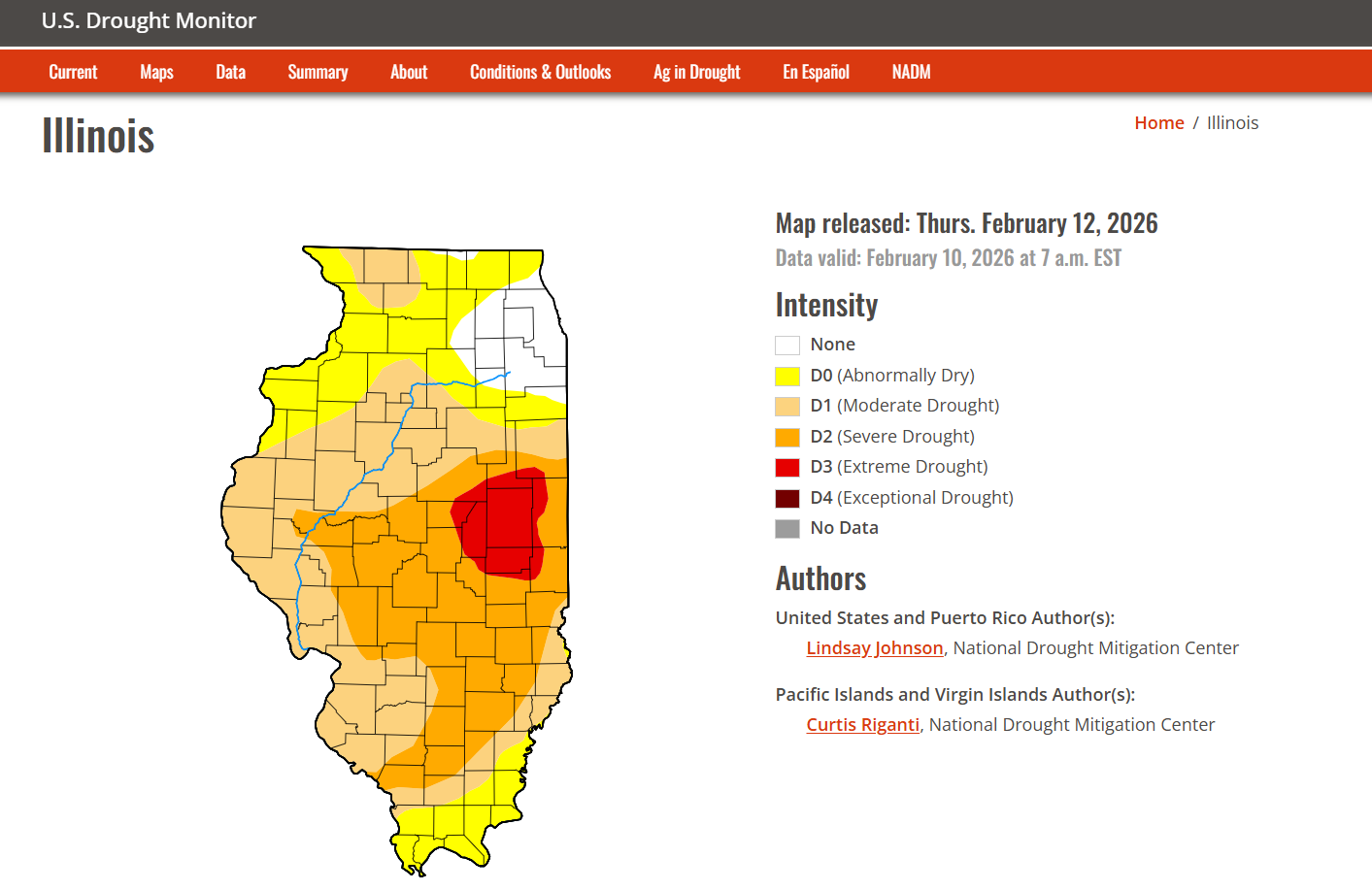
Drought’s impact on soil testing
Your soil health may not be what you think it is.
With most central, western, and northern Illinois counties in drought conditions, your soil test results may not be telling you what’s really happening under ground.
Dry soils can affect soil test results causing inaccurate results and inaccurate fertility application.
“Low moisture means less microbial activity to recycle some of our macronutrients back into the soil and ties up soil macronutrients to the clay particles,” says Chris Enroth, Illinois Extension horticulture educator.
Potential problems
Test levels for potassium (K) may appear lower than they actually are, according to Iowa State University Extension in its impact of drought conditions on test results report. In dry conditions, the soil moisture that helps release potassium is reduced.
“Soil pH values likely will be less than normal (more acidic) with drought, with differences ranging from 0.1 to 0.4 pH units being common,” says Antonio Mallarino, professor emeritus with Iowa State University.
Soil test levels for phosphorus (P) may also be slightly lower than normal. “The effect of the dry soil on phosphorus levels isn’t as dramatic as potassium, but less moisture in the soil may lower the soil test results,” writes staff at A&L Great Lakes Laboratories. “The same situation of reduced crop yields may result in less phosphorus being removed from the soil.”
To further complicate soil testing, dry ground makes it difficult to reach the 6- to 9-inch depth to draw your soil core. The sample may break apart making it difficult to see the nutrient stratification.
“Field fires, low grain moisture, and tillage practices are proving to be difficult hurdles, but dry soil conditions make soil sampling especially difficult,” Great Lakes Laboratories. “Not only are soil sampling conditions challenged by dry soil, but lab results take more interpretations than seasons with adequate circumstances.”
So what do we do?
“Soil sampling consistently at the same time of year is a preferred practice for tracking changes over time,” says Dennis Bowman, Illinois Extension digital ag specialist. “However, waiting for good conditions is better than getting a bad sample now.”
Spring sampling when more uniform moisture is available and nutrients have been released from the previous crop residue is becoming popular, but there are cautions when making applications during the same season as planting, such as salt injury or inadequate nutrient levels for growing plants.
“A soil test is just a snapshot,” says Travis Meteer, Illinois Extension beef specialist. “You don’t want to take that snapshot when everything is shut down.”
Best advice: When possible, postpone soil testing until moisture can allow normal nutrient cycling. If you do take dry samples, consult with your Extension professional to accurately interpret the results.
Illinois Grower Wins It All at World Dairy Expo
Theo and Rose Peterson of Peterson Farm, Poplar Grove, Ill., exhibited the overall grand champion forage at the 41st World Forage Analysis Superbowl at World Dairy Expo in Madison, Wis. Peterson Farm’s baleage entry topped 232 competitors. Read more at Farm Progress.
Other Illinois winners include:
Kendall Guither, Walnut: Baleage first place
Peterson Farm, Poplar Grove: Commercial Hay, fifth place
Reimer Goat Dairy, Capron: Dairy Hay, fourth place
Plan now for your 2026 dues
Plan now for your 2026 dues
Working together, we can build an agriculture future that supports farm families and soil health.
Member Benefits
All benefits of the American Forage and Grassland Council.
Quarterly Forage Feed newsletter with articles and events of interest.
Corporate members received complimentary standard exhibit space at two IFGC sponsored events per year and recognition in the newsletter and website.
Member Fees
Student Membership: $5
Individual Membership: $30
Northwest IFGC Membership: $50
Corporate Membership: $200
Pay online at the American Forage and Grassland Council.