
September 2025
Invasive Asian longhorned tick creates problems for growers
The Asian longhorned tick has found its way to Illinois, bringing potential health risks for livestock, pets, and people with it. Teresa Steckler, Illinois Extension, warns producers to inspect their livestock and pastures carefully. The adult female tick reproduces asexually without a mate and can lay up to 2,000 eggs over its 2-year lifecycle which contributes to its rapid spread.
Identification
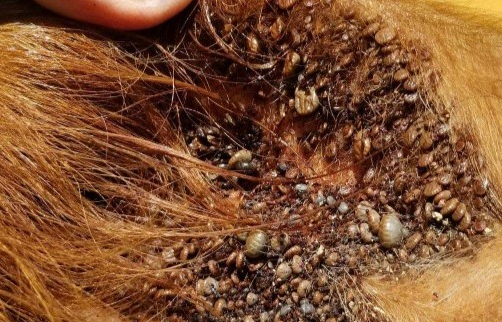
These invasive ticks are small, very, very small. Adults are about the size of a pea when fully engorged. In nymph stage, they are about the size of a poppy seed; larva are only slightly larger than a pin head. They are brown in color.
Livestock
Check ears, brisket, udder, tail head, vulva areas, and folds of skin on livestock. The tick can be hard to detect on woolen sheep; therefore, actual shearing or parting the wool to see skin is best. They may be found any time from spring through fall in various stages. Larvae are particularly active in August and September and may number in the thousands on a single livestock animal.
The tick transmits Theileria orientalis which causes a disease called theileriosis in cattle. Symptoms include fever, weakness, and anemia. The disease mimics the symptoms of anaplasmosis, but unlike anaplasmosis which usually affects cattle two years and older, this disease can strike cattle of any age and cause abortions.
Prevention
The tick is susceptible to the chemicals used to treat other ticks on cattle. Care should be taken to not reintroduce cows to pastures which are heavily infested with the tick. Other prevention methods may need to be employed if pastures become heavily infested. She also recommends mowing pasture fence lines, especially those that butt up to woods, creeks, and rivers.
Read the full blog and download resources
2025 Illinois Forage Expo
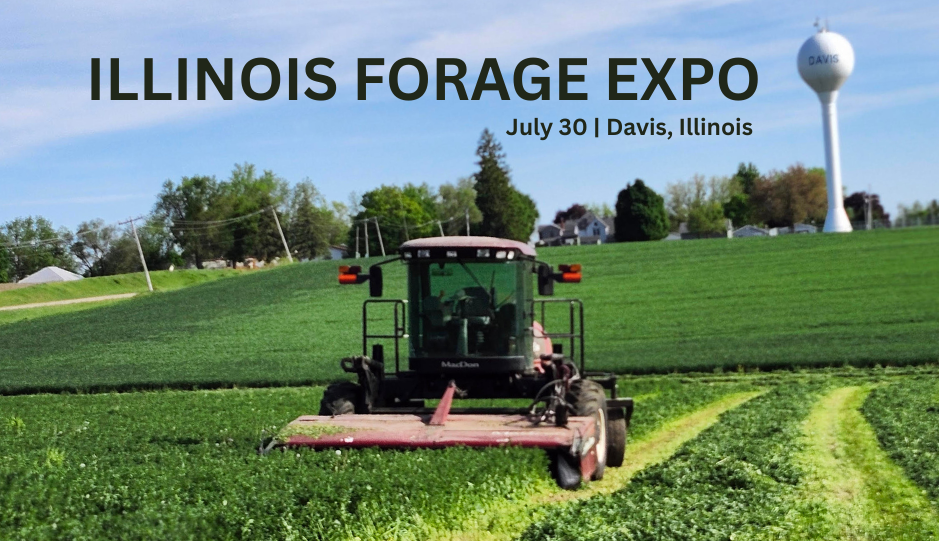
You can’t control the weather, but you can control how you pivot. Although rain prevented field demonstrations at this year’s Forage Expo, a crowd of 130 people did have a full day of educational sessions, industry displays, and bale wrapping demonstration.
Presentations were given by Josh Franks, NRCS; Kathryn Seebruck and Travis Meteer, Illinois Extension; Cal Schaver; and Brian Jordan, Jordan Ag Supply.
Special thanks to the Stephenson / Winnebago Beef Association for the meal. Hosts for the Expo were Eric Stiegler and Don Brown Farms. The Expo is sponsored by the Illinois Forage and Grassland Council and the Northwest Illinois Forage and Grassland Council.
Commercial Exhibitors: Agri-King, Birkey’s Farm Store, Compeer Financial, Dehaven Equipment, Diehard Farms, Foresight State Bank of Davis, Helm Truck and Equipment, Heritage Tractor, Illinois Grazing Lands Coalition, Illinois Grazing and Forage Hub, Illinois Forage and Grassland Council, Jordan Ag Supply, Krone America, LaCrosse Seed: Mark Meyers and Don Erwin, Landis Ag, Midwestern Bio Ag, NRCS, NIEA: David Nehring, Kyle Newman, Parallel Ag: Jim Drafall, Peabudy’s North, R.J. Bowers, Bob Reeter Custom Large Square Baling, Schultz’s InterState Ag Inc., Stephenson County Farm Bureau, Stephenson County SWCD, Stephenson Service Company, University of Illinois Extension, Winnebago-Boone Farm Bureau
Outstanding Producer Award
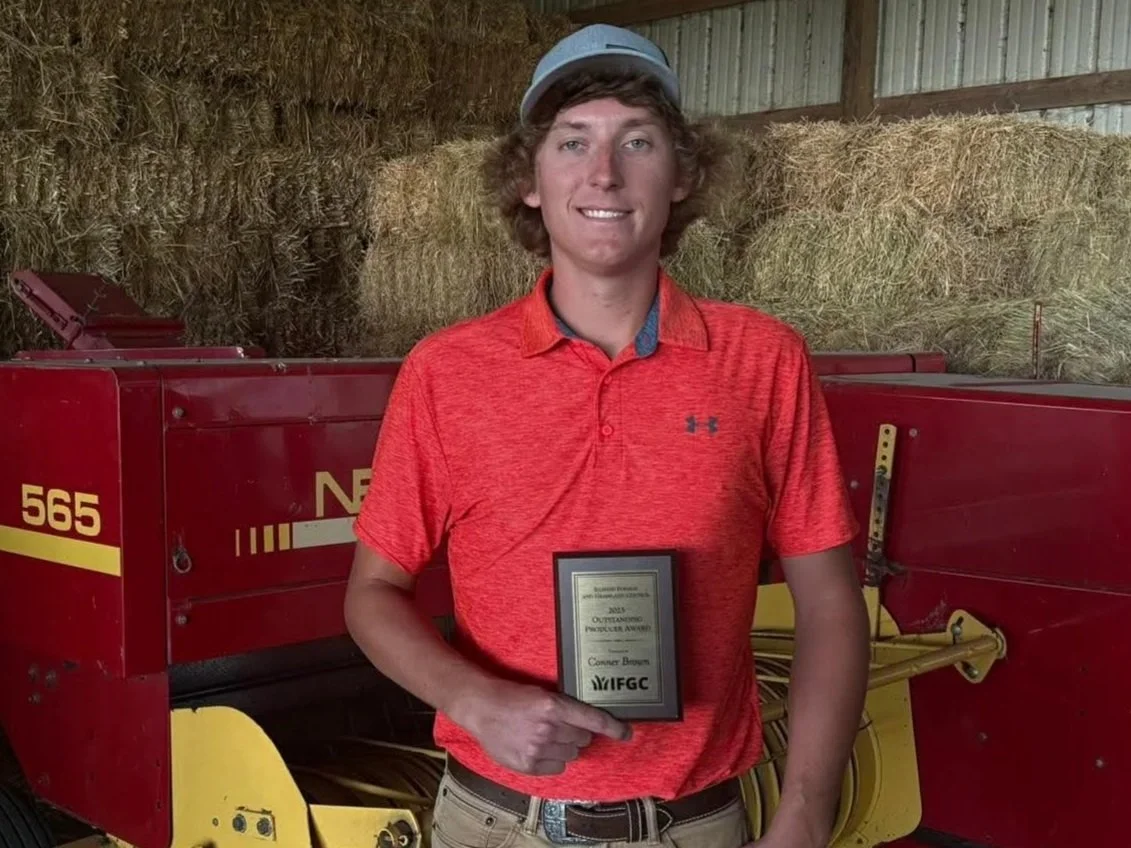
Conner Brown (left) of Brown’s Baling and Hay was presented the Outstanding Producer Award at the 2025 Forage Expo. Conner began his business with funds from the Wayne Wackerlin Memorial Fund.
Jim Morrison, retired University of Illinois Extension educator and former secretary of the NW Forage Council, was presented the Outstanding Education and Government Award.
Agri-King was awarded the Outstanding Industry Award. It provides analysis for the Quality Hay Contest and prints the IFGC newsletter.
New Video Series Available from The Hub
IFGC is a partner with the Illinois Grazing Lands Coalition, Illinois Extension, and NRCS in the creation of The Hub. The Hub is a free, farmer-focused online platform is designed to help Illinois producers improve pasture management and grazing practices, regardless of experience level. The Hub brings together grazing guidance, forage selection tools, industry event calendars, and producer stories all in one easy-tonavigate space.
How To Take Forage Brix Test: Brix scoring is important because it tells us how much sugar content is in our forages and the nutrition density in our dry matter.
How to Use a Refractometer: A refractometer is used to measure brix, the sugar content in plants. Understanding the quality of your forages will help you adjust the forage options for your livestock.
How to Set Up Temporary Polywire Fences: With polywire fencing, you can easily create temporary paddocks that can be moved easily and frequently.
Calculating Paddock Size and Stocking Rate: A grazing stick helps producers know how much forage the herd needs and how large to make your paddocks.
Before the Move: Check Body Condition and Temperament: Choosing the right time to move your cattle to a new grazing paddock will improve your herd's average daily gain performance.
After the Move: Check Manure and Plant Residual: Check the consistency of the manure and the plant residuals to determine if cattle are getting the proper nutrition while leaving adequate forage behind for regrowth.
2025 Fall EVENTS
Grazing schools highlight practical, profitable solutions
The best advice often comes from peers who have worked through the obstacles to build profitable resilient farm operations. These innovative livestock producers will tell their stories at this year’s Illinois Grazing Lands Coalition grazing schools. You have two opportunities to attend. The two-day events includes both classroom and in-field instruction.
September 12 and 13: Grazing School, Featuring Virtual Fencing, Cambridge in Northern Illinois Bottens Family Farm will highlight cropland grazing, NoFence virtual fencing, direct-toconsumer marketing, and multispecies goat/cattle grazing.
September 26 and 27: Grazing School, Waltonville in Southern Illinois Hottes Angus Farm will highlight adaptable marketing plans, maximum use of EQIP programs, and employing genetic improvements for grazing as a main feed resource.
September 3: Adding Small Ruminants Thinking about expanding your livestock operation? Curious about the benefits of adding sheep or goats to your grazing system? Join the National Grazing Lands Coalition for an insightful webinar.
September 6: Exploring Interseeding, Cover Crop Mixes, and Soil Health David and Dean Dedert farm near Quincy. Part of their operation includes Twin Mill Farm, a 90-acre family farm that has been in the Mittelberg family for over 100 years. The farm has undergone a variety of transitions over time, from raising beef cattle to hogs – and now, solely growing row crops. Now they are transitioning the land toward regenerative management using no-till and cover crops.
September 11: Regenerative Farming for Improved Water Quality Explore how regenerative agriculture can improve land use, generate higher water quality, restore ecosystems for a healthier environment, and create healthier water systems and soil health.
September 26: Virtual Fence Foundations: Pasture Nutrient Management Join us for a discussion on pasture fertility management and how virtual fencing might be a tool for improved nutrient distribution.